
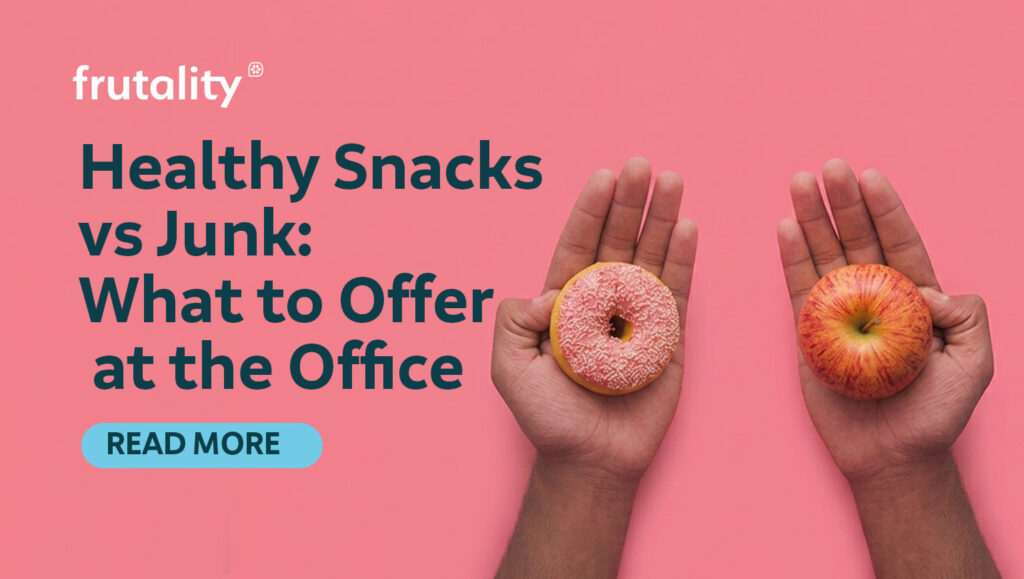
Between meals, in almost any office, snacking shows up. Whether that habit drains or adds depends on what’s within reach. Offering healthy snacks for the office instead of letting the vending machine win is one of the simplest (and most cost-efficient) ways to care for the team’s energy and wellbeing.
In this guide you’ll see the real difference between a healthy snack and unhealthy snacking, what to offer depending on the time of day, how to get it right without the hassle, and why making the healthy choice easy is what actually works.
In short
- Snacking isn’t the problem; what gets snacked on is. The key is what you have on hand.
- Ultra-processed foods give an energy spike followed by a crash; healthy snacks keep levels steady.
- The WHO recommends that free sugars make up less than 10% of daily intake.
- Fresh fruit, natural nuts, and simple dairy are the best alternatives.
- Putting the healthy option in sight and within reach is what beats vending-machine snacking.
Healthy snack vs junk: what’s the real difference
Snacking between meals is normal and nothing to feel bad about. The problem shows up when the only thing available is pastries, cookies, salty snacks, or sugary drinks. That kind of snacking gives a quick energy rush from the sugar, followed by a crash that leaves the team more tired and less focused than before.
A healthy snack, by contrast, provides energy more steadily, satisfies better, and adds nutrients rather than just calories. It’s not about banning anything, but about changing the default option: when the healthy choice is the easiest to grab, it gets eaten naturally.
Why what you snack on at the office matters
What the team snacks on throughout the day has more impact than it seems. It shapes energy and focus, overall wellbeing, and the habits that become normal at the company. Caring for this detail is a simple way to support team productivity and is part of good healthy eating at work.
And it’s no small matter for health: the World Health Organization recommends that free sugars make up less than 10% of daily caloric intake, hard to meet when office snacking is built on sugary products. You can read more in its fact sheet on healthy diet.
What healthy snacks to offer at the office
You don’t need a huge pantry. A few well-chosen options cover almost everything:
Fresh seasonal fruit
The simplest and most complete option: it provides water, fiber, vitamins, and natural sugars that give steady energy. It’s also convenient to eat and highly visible. Having fresh fruit for offices on hand is the easiest way for the team to snack better.
Natural nuts
Almonds, walnuts, or hazelnuts (raw or roasted, not fried or heavily salted) satisfy, provide healthy fats and protein, and work great for mid-morning hunger.
Dairy and simple options
Plain yogurt, a handful of cherry tomatoes, or some veggie sticks round out the offering without any hassle. The idea is to have variety for different tastes and moments.
Typical snacking and its healthy alternative
| Instead of… | Offer… | Why |
|---|---|---|
| Pastries and cookies | Fresh seasonal fruit | Steady energy, no sugar spikes |
| Salty vending snacks | Natural nuts | Filling and with healthy fats |
| Sugary sodas | Water and high-water fruit | Hydrate with no added sugar |
| Ultra-processed bars | A handful of nuts or fruit | Less sugar and additives, more satiety |
| A fourth or fifth coffee | A piece of fruit or herbal tea | Avoids jitters and ups and downs |
How to get office snacks right
Having good snacks isn’t enough if they don’t get eaten. These details make the difference:
- In sight and within reach: in a high-traffic spot, not hidden in a cabinet. What’s seen gets eaten.
- Variety: combine fruit, nuts, and another option or two to cover tastes.
- Ready to eat: the less effort, the better. Convenience wins.
- Consistency: never let them run out. On-and-off breaks the habit.
- No banning: offering better alternatives works far better than forbidding snacking.
This approach ties in with the team’s breaks: we look at it in active breaks and healthy snacks.
The company’s role
The company largely decides which option is the easiest to grab. Putting fruit in the office and healthy snacks within reach, and doing it consistently, is a simple way to care for the team that also reinforces employee wellbeing and the image of a company that cares about its people. An office fruit service makes sure that healthy option is always available, so no one has to keep track of the shopping. For guidance, the European Food Safety Authority (EFSA) offers insight on food-based dietary guidelines worth a look.
Frutality tip
Don’t try to eliminate snacking: relocate it. Put a bowl of fruit and a bowl of nuts right where the less healthy temptation used to be (next to the coffee machine, for example).
Why does it work? People snack on what’s closest and most visible. Change the default option and the rest takes care of itself. 🍏
Frequently asked questions
What healthy snacks should you offer at the office?
Fresh seasonal fruit, natural nuts, and simple options like plain yogurt or veggie sticks. The ideal is to offer variety to cover different tastes and times of day.
Why is a healthy snack better than vending-machine snacking?
Because it provides energy more steadily and satisfies better, while ultra-processed foods give a sugar spike followed by a crash that drains focus. They also add nutrients rather than just calories.
How can you get the team to snack more healthily?
By making the healthy choice easy and in sight, offering variety, keeping it consistent, and not banning anything. When the healthy option is the easiest to grab, it gets eaten naturally.
Is fruit a good office snack?
Yes, it’s one of the best: it provides water, fiber, vitamins, and steady energy, it’s convenient to eat, and it replaces unhealthy snacking well. Keeping it always available is the key.
Make the healthy snack easy at your office
At Frutality we bring fruit for companies in season to your team, from fruit baskets for the office to weekly restocking. No lock-in contract, and you pay only for what you use.