
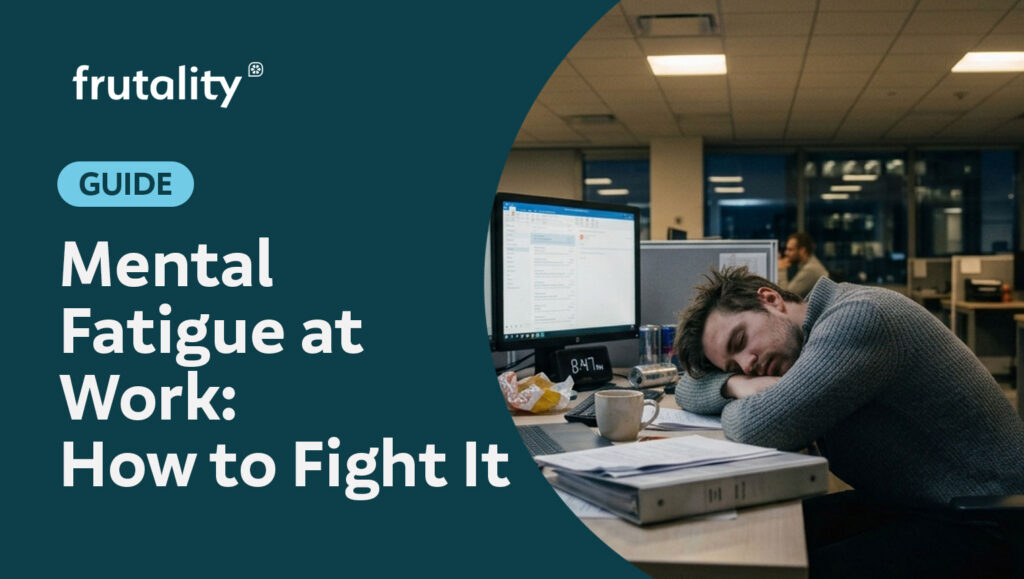
Mental fatigue at work is that feeling of an “overloaded” mind: it’s hard to concentrate, everything feels heavier, and performance drops even when there’s no physical effort behind it. The good news is that, with simple habits and some support from your company, it can be prevented and fought.
In this article you’ll see what it is exactly, why it shows up, how to recognize it, and what you can do to get your clarity and energy back throughout the day.
In short
- Mental fatigue affects concentration, mood, and motivation—not just the body.
- It usually comes from overload, multitasking, being constantly connected, and a lack of breaks and rest.
- You fight it with real disconnection, better workload management, movement, good nutrition, and rest.
- It’s not only the individual’s responsibility: company culture and how work is organized matter a lot.
What is mental fatigue at work?
Mental fatigue is the exhaustion that shows up after sustained cognitive effort: hours of concentration, decisions, meetings, or attention split across many tasks. Unlike physical tiredness, you feel it less in the body and more in the head: it’s hard to think clearly, hold focus, and find motivation. It’s a normal response, but when it becomes constant, it’s worth addressing.
Why does it happen? Most common causes
Mental fatigue rarely has a single cause. These are the most common ones at the office:
- Workload overload and tight deadlines on a sustained basis.
- Multitasking: constantly jumping from one thing to another wears out your attention.
- Being always connected: notifications, emails, and screens with no break.
- Lack of breaks and long workdays without truly disconnecting.
- Little control or autonomy over your own work.
- Poor rest: sleeping too little or badly amplifies all of the above.
Signs of mental fatigue
Recognizing it early helps you rein it in. Some typical signs:
- Trouble concentrating and more mistakes or forgetfulness than usual.
- Irritability, mood swings, or low motivation.
- A feeling of exhaustion that doesn’t fully go away after one night’s rest.
- Procrastination and the sense that everything takes more effort.
One important note: if that exhaustion persists for weeks despite rest and affects your day-to-day life, it may be more than occasional fatigue (burnout, for example). In that case, the wisest thing is to consult a health professional.
How to fight mental fatigue at work
1. Take breaks and truly disconnect
The mind needs micro-rests to recover. Short breaks to stand up, look into the distance, or change scenery keep fatigue from building up. We cover this in active breaks and healthy snacks.
2. Manage the workload and protect your focus
One task at a time pays off more than ten half-done. Prioritizing, organizing the day into focus blocks, and cutting interruptions greatly lowers mental load. It’s one of the keys in our guide to how to improve your team’s productivity at the office.
3. Set limits on being always connected
Batching your email checks, muting notifications during focus time, and respecting downtime outside working hours help the mind genuinely rest.
4. Take care of rest, movement, and energy
Sleeping well is the foundation. Add movement (standing up, walking, stretching) and nutrition and hydration that keep energy steady, without the ups and downs of sugar and too much coffee. We look at this in healthy eating at work and in office hydration.
What drains the mind and what helps restore it
| Area | What drains the mind | What helps restore it |
|---|---|---|
| Workload | Multitasking and being “always available” | One task at a time and clear priorities |
| Connection | Notifications and screens with no break | Digital disconnection and real breaks |
| Rest | Nonstop workdays and poor sleep | Short breaks and good nighttime rest |
| Body | Sitting all day | Movement and fresh air |
| Energy | Skipping meals, sugar, and too much coffee | Balanced nutrition and hydration |
The company’s role
Mental fatigue isn’t only up to each person: how work is organized matters enormously. Realistic workloads, respect for downtime, fair meetings, autonomy, and a good atmosphere make the difference. Taking care of this doesn’t just improve wellbeing; it also reduces absenteeism and helps retain talent. Small everyday gestures—including having fresh fruit on hand for a healthy break—add to that culture of care.
Frutality tip
When your mind feels maxed out, take a real break: stand up, step away from the screen for a few minutes, and grab a piece of fruit while you’re at it. No “resting” by scrolling your phone.
Why does it work? Shifting focus and moving your body lets the mind reset, and fruit provides steady energy for the next stretch of the day. 🍊
Frequently asked questions
What is mental fatigue at work?
It’s the exhaustion that shows up after sustained cognitive effort (concentration, decisions, meetings, multitasking). You notice it mostly in trouble concentrating, mood, and motivation, rather than in the body.
How is it different from physical tiredness?
Physical tiredness comes from the body’s effort; mental fatigue comes from the mind’s. You can feel mentally exhausted even if you’ve barely moved, because what’s been “used up” is your attention and ability to concentrate.
How can you fight mental fatigue?
With real breaks and disconnection, better management of workload and focus, setting limits on being always connected, and taking care of rest, movement, and nutrition. Support from the company is key.
When should you seek professional help?
If the exhaustion persists for weeks despite rest, affects your daily life, or comes with persistent distress, the wisest thing is to consult a health professional.
Caring for your team’s mind starts with the small details
At Frutality we bring fresh seasonal fruit to your office, for healthier breaks and teams with more energy.